May 5, 2026
Maintaining a smooth and controlled ride is essential for both your comfort and your safety on the road. When your suspension system begins to fail, it compromises your ability to steer, stop, and handle various driving conditions effectively. This guide identifies the critical red flags that indicate you should seek professional assistance to restore your vehicle's performance and stability.
1. Experiencing Excessive Bouncing After Bumps
The primary job of a shock absorber is to dampen the energy of the springs as they compress and rebound. If you drive over a speed bump or a dip in the road and your vehicle continues to oscillate or bounce several times afterward, your suspension is no longer performing its damping function. This lack of control suggests that the internal valving or fluid within the unit has depleted, making it a primary candidate for auto shock replacement services. Ignoring this constant motion not only makes for an uncomfortable ride but also puts undue stress on other chassis components, leading to more expensive repairs down the line.
2. Noticing Nose Dives During Braking
When you apply the brakes, the weight of the vehicle shifts forward; however, healthy struts should be able to support that weight and keep the body relatively level. If you feel the front end of your car "diving" toward the pavement every time you slow down, your struts are likely worn out and unable to manage the load transfer. This is a significant safety hazard because a nose-heavy car takes longer to stop and becomes much harder to steer during an emergency maneuver. Seeking auto shock replacement services at the first sign of diving can reduce your stopping distance and keep your vehicle's weight distributed evenly across all four tires.
3. Observing Uneven Tire Tread Wear
While many drivers associate "cupped" or "scalloped" tire wear with poor alignment, it is often a direct symptom of a failing suspension. When shocks are worn, they allow the tire to literally bounce down the road, creating high and low spots on the rubber tread rather than maintaining consistent contact with the asphalt. This irregular wear pattern significantly shortens the life of your expensive tires and can create a loud humming noise while driving at highway speeds. A technician providing auto shock replacement services will often inspect your tires first, as the rubber provides a permanent record of how the suspension has been behaving over the last several thousand miles.
4. Feeling Instability During High Winds
A vehicle with a compromised suspension system will often feel "flighty" or unstable, particularly when encountering crosswinds on the interstate. If you find yourself constantly fighting the steering wheel to keep the car in its lane during a breeze, the shocks are likely failing to keep the body of the car squared to the frame. This sensation of wandering or swaying is not just mentally exhausting for the driver; it indicates that the car's aerodynamic stability is compromised. High-quality shock replacement services can restore the tight, planted feeling your vehicle had when it was new, allowing you to drive with confidence even in less-than-ideal weather conditions.
5. Detecting Fluid Leaks on the Shock Body
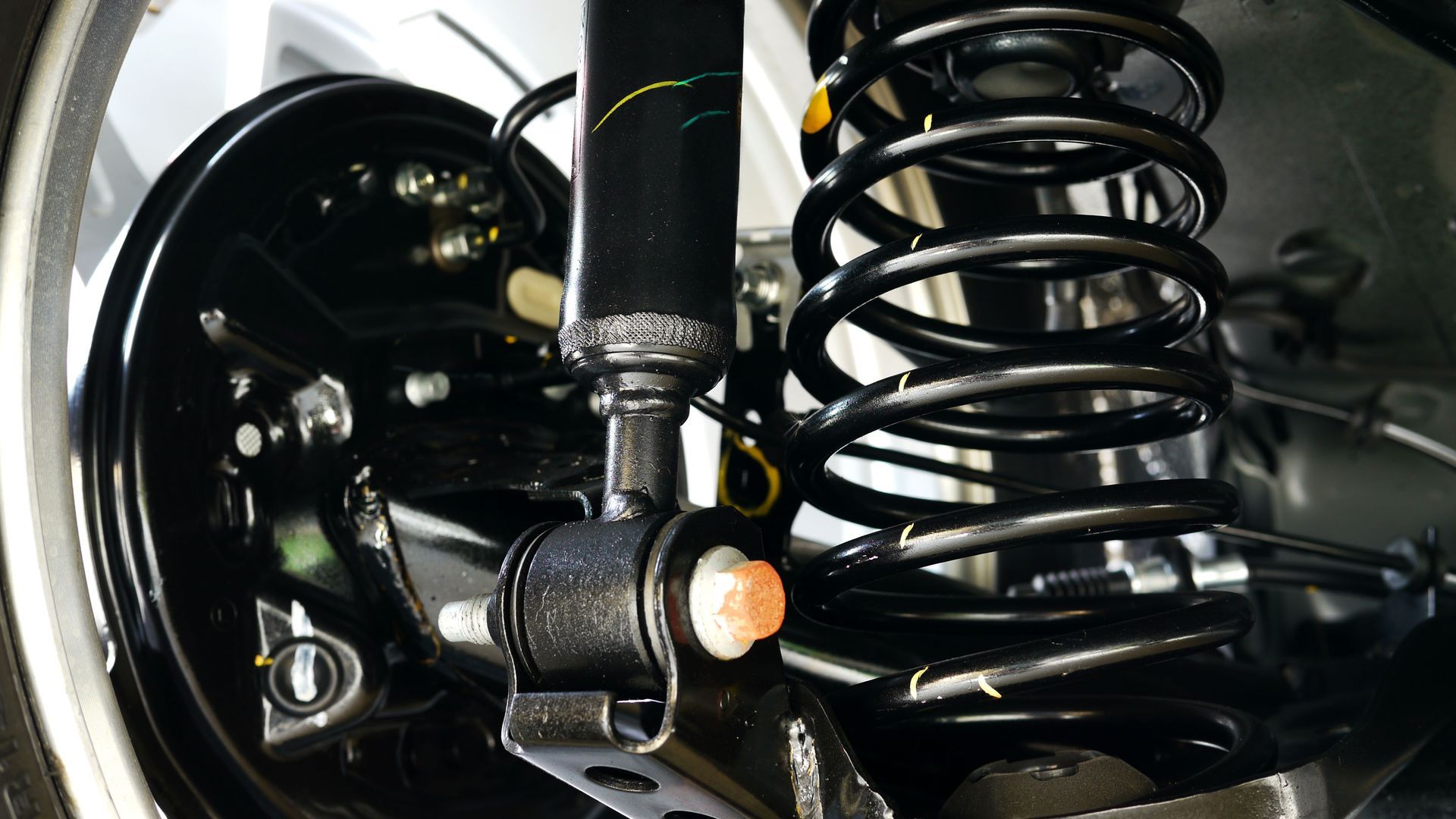
Most modern shock absorbers and struts are filled with hydraulic fluid that helps dissipate the heat generated by road friction. If you look behind your wheel and see that the exterior of the shock or strut is covered in wet, dark oil, the internal seals have likely ruptured. Once the fluid leaks out, the component loses its ability to dampen movement, eventually leading to a complete failure of the unit. This is one of the most objective signs that you need auto shock replacement services, as a leaking shock is a physical confirmation of internal damage that cannot be repaired through simple maintenance.
6. Hearing Clunking Noises Over Obstacles
A healthy suspension system should operate silently, but worn-out bushings or internal components can lead to audible protests from the undercarriage. If you hear a metallic "clunk" or "thud" every time you hit a pothole or turn into a driveway, it often means that the rubber mounting points have disintegrated or the internal piston is bottoming out. These noises are the sound of metal-on-metal contact, which can eventually damage the vehicle's frame or steering knuckles. During auto shock replacement services, a mechanic will typically replace these worn mounts and bushings along with the shocks to ensure the entire assembly is quiet and secure.
7. Witnessing Significant Body Roll in Corners
If your car feels like it is leaning excessively to one side when you take a turn, your suspension is failing to counteract centrifugal force. This "body roll" makes the vehicle feel top-heavy and unresponsive, increasing the risk of a rollover in taller vehicles like SUVs or trucks. Performance enthusiasts often pay close attention to this metric, as it directly impacts the vehicle's "G-force" capabilities on a track. According to Global Market Insights, the off-road vehicle shock absorber market size was valued at USD 17.3 billion in 2024. This massive valuation reflects how critical high-performance damping is for vehicles that face the extreme lateral and vertical forces of rugged terrain.
8. Understanding the Impact of Mileage
While driving habits and road conditions vary, most manufacturers suggest that suspension components begin to degrade significantly after 50,000 miles. Over time, the internal valving cycles millions of times, and the hydraulic fluid undergoes thermal breakdown, gradually reducing the unit's effectiveness. Even if you do not notice a sudden change, the "slow fade" of suspension performance can be dangerous because you unknowingly adapt your driving style to compensate for the poor handling. Regular inspections every 12,000 miles can help you plan for auto shock replacement services before the components reach a state of total failure.
9. Comparing Shocks Versus Struts
It is important to understand whether your vehicle utilizes a shock-and-spring setup or a structural strut assembly, as the repair process differs for each. Shocks are independent components that simply dampen motion, while struts are a structural part of the suspension that also supports the weight of the vehicle and dictates the wheel alignment. Replacing a strut is generally more labor-intensive and requires an alignment afterward to ensure the wheels are tracking correctly. Regardless of the design, both components are essential for maintaining the "tire-to-road" contact that allows your brakes and steering to function as intended.
10. Evaluating the Cost of Delay
Postponing suspension repairs might seem like a way to save money, but it almost always leads to higher expenses in the long run. Worn shocks cause premature wear on tires, tie rod ends, ball joints, and even the transmission mounts due to the increased vibration and impact. By investing in professional services early, you preserve the integrity of the entire vehicle and maintain its resale value. Furthermore, the increased safety for you and your passengers is an intangible benefit that far outweighs the cost of the parts and labor required to refresh it.
Proactively addressing these warning signs ensures that your vehicle remains safe, comfortable, and predictable on every journey. By paying attention to the way your car handles bumps, corners, and braking, you can catch suspension issues before they escalate into dangerous failures. Your commitment to regular maintenance will keep your ride smooth and your tires firmly planted on the road for years to come. If you are concerned about your shocks, contact Elite Shock Services, Inc today to learn more!